
In short
A cataract is the eye's natural lens turning cloudy, and surgery is the only thing that fixes it. The cloudy lens is removed and a clear artificial lens (an IOL) goes in its place. Here it is a day-care operation of 15 to 30 minutes per eye, usually with no injection, no stitches and no patch. The cost depends mostly on the lens you choose, from ₹30,000 to ₹1,80,000 per eye.
What is Cataract?
A cataract is a cloudy area that forms in the lens of the eye, which can lead to blurred or hazy vision.
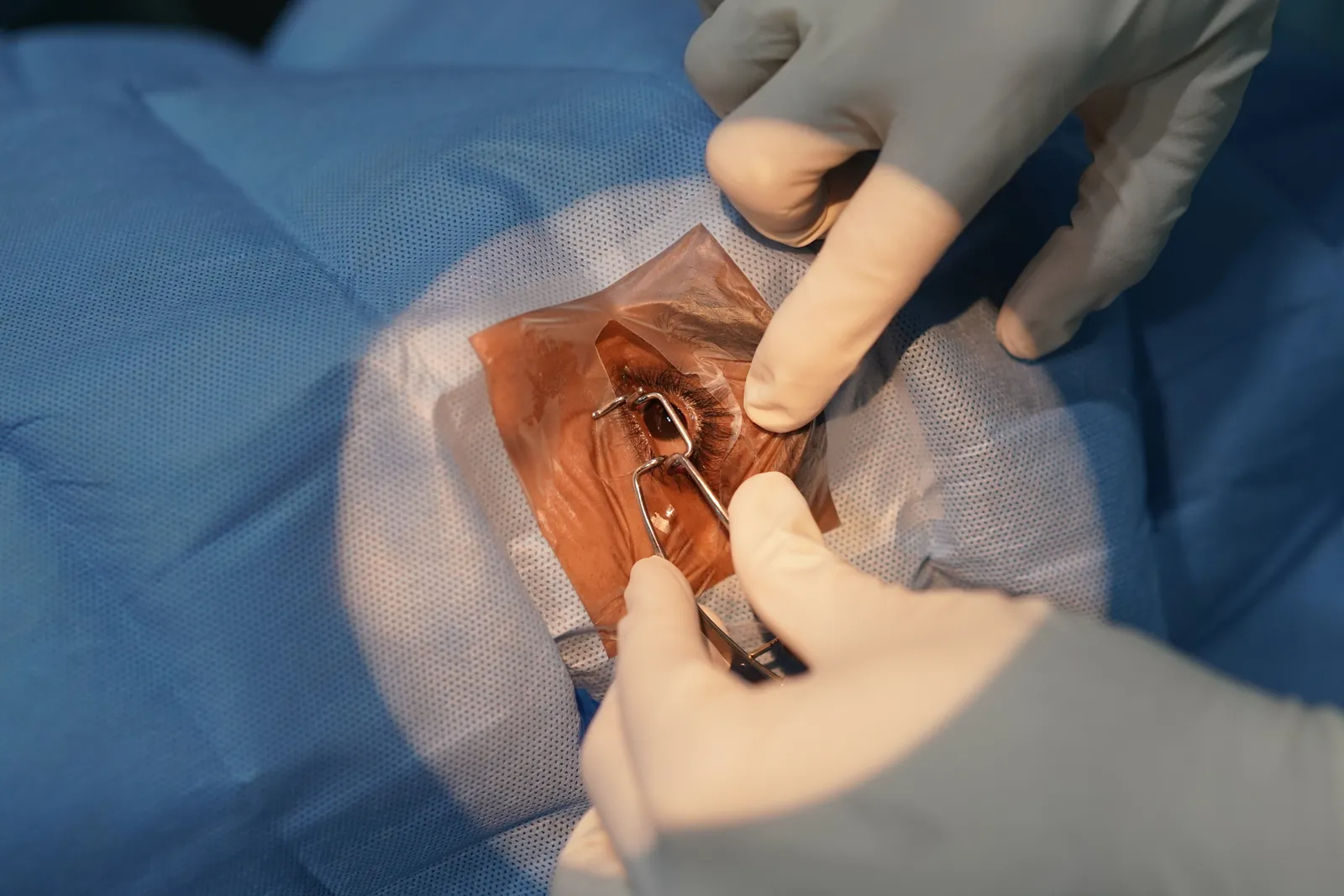
Cataract treatment involves the removal of the eye's cloudy natural lens, which is causing blurred vision, and replacing it with an artificial lens. This is done through a surgical procedure called cataract surgery, a well-established and effective treatment. Like any surgery, it carries some risk, which your surgeon will explain.
You can see how a cataract changes everyday vision in our vision simulator.
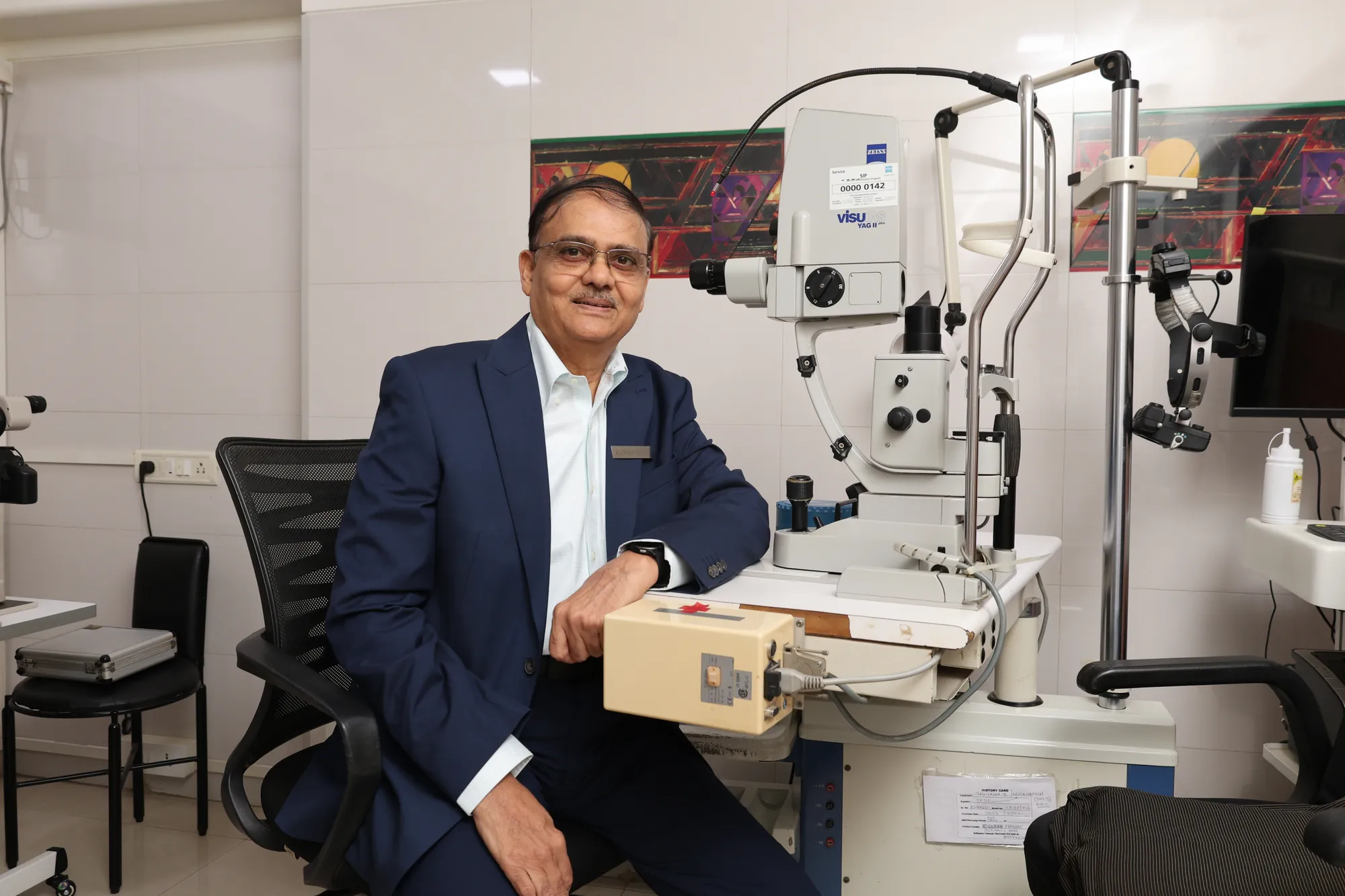
Doctor-led eye care in Malad West since 1989, with every specialty under one roof.
When to get Cataract Treatment?
You should get cataract treatment when your cataract symptoms, such as blurry vision or cloudy vision, start affecting your daily life. If you find it difficult to read, drive (especially at night), or see clearly in bright light, it might be time to consider cataract surgery.
Initially, stronger glasses or better lighting may help, but as the cataract worsens, these solutions won't be enough. If you're wondering when to get cataract surgery, it's best to consult with an ophthalmologist who can assess your condition and help determine the right time for cataract removal.
How to Treat Cataracts: Surgical vs. Non-Surgical Options
When it comes to treating cataracts, a surgery is the quick and simple solution.
Non-Surgical Options
Treatment for cataract includes removal of the cataract by surgery and replacing it with an Intra-Occular Lens. If one wants to delay it due to some reasons, non-surgical options can help manage mild cataract symptoms. These include:
- Stronger prescription glasses: Often, updating your glasses can improve your vision as the cataract develops.
- Increased lighting: Using brighter lights while reading or engaging in other activities can help reduce glare and improve clarity.
- Anti-glare sunglasses: These can be beneficial, especially when driving or being outdoors.
However, these options are temporary and may not provide a long-term solution.
Surgical Options
Cataract surgery is the most common and effective treatment for moderate to severe cataracts. It involves:
- Phacoemulsification: This is the standard procedure where the cloudy lens is broken up using ultrasound and then removed. An intraocular lens (IOL) is then implanted to restore clear vision.
- Implanting the lens: An intraocular lens (IOL) is then implanted to restore clear vision.
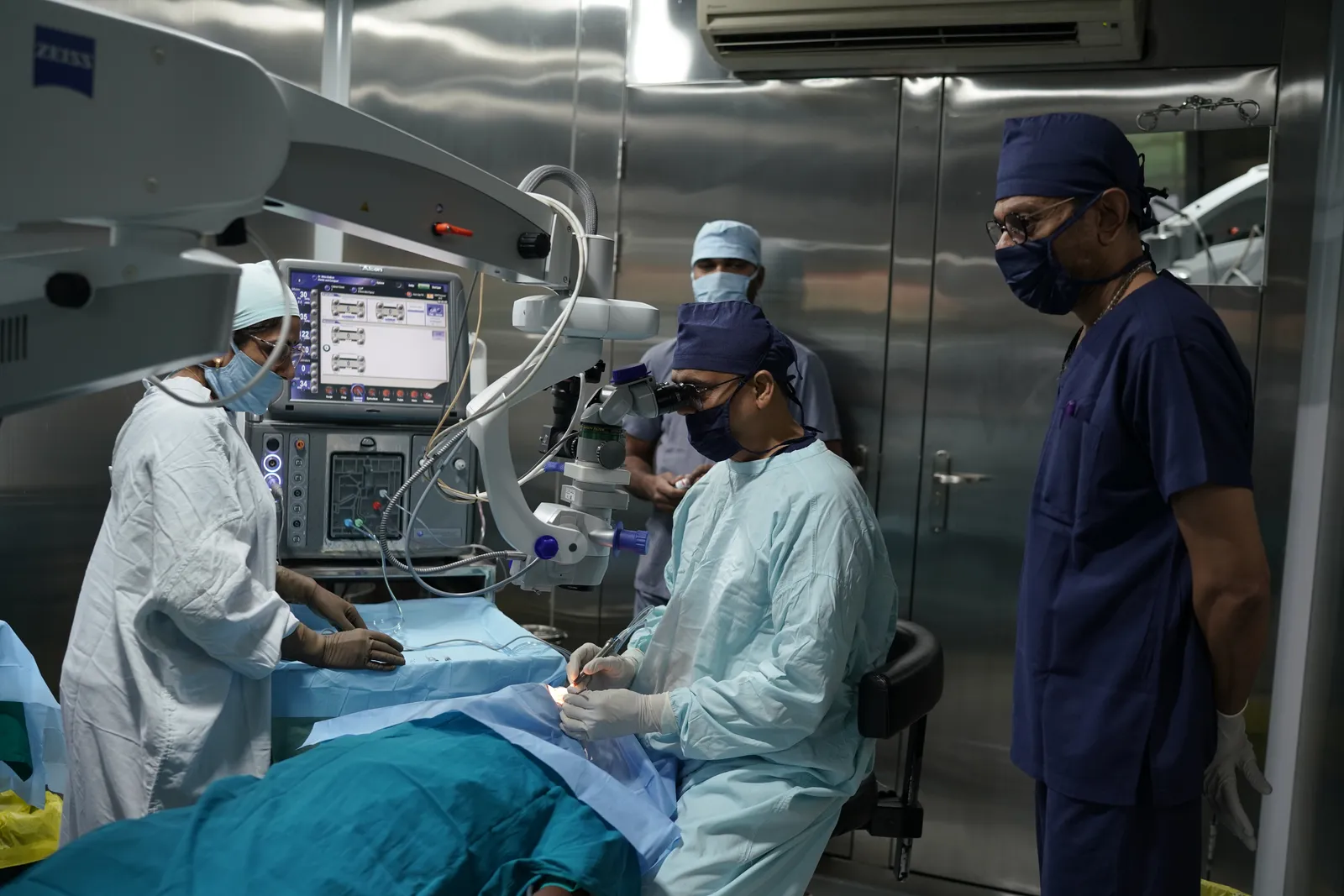
- Due to advancements in medical science, we perform minimally invasive sutureless surgery for a quick recovery. No injections, no stitches, no eye patch.
Surgery is usually recommended when cataracts significantly impair your quality of life, making it difficult to perform daily activities. An ophthalmologist can help determine the best course of action based on your individual needs.
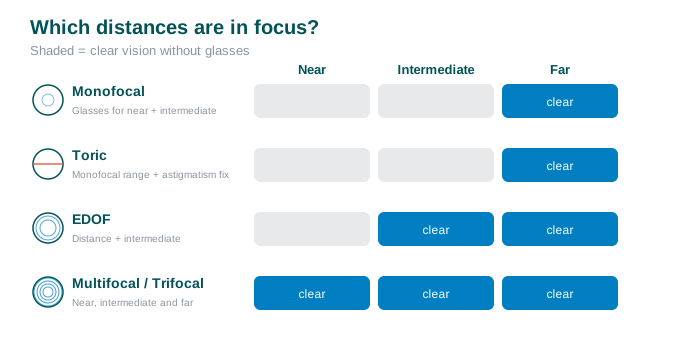
Which lens (IOL) is right for you?
| IOL type | What it is | What it does | Consider if |
|---|---|---|---|
| Monofocal | A single-focus lens with the same power across the whole lens | Sharp vision at one distance, usually far; reading glasses still needed | You want proven, cost-effective clarity and don't mind glasses for near work |
| Toric | A lens with more power in one direction than the other, which cancels out astigmatism | Corrects astigmatism together with distance vision; near tasks may still need glasses | You have significant astigmatism |
| EDOF (Extended Depth of Focus) | A lens that stretches a single focus into a continuous range | Good distance and intermediate vision (useful for screen work); very fine print may still need glasses | You want less dependence on glasses, with fewer night-time glare effects than multifocals |
| Multifocal / Trifocal | A lens with several focusing zones for near, intermediate and far | Vision across near, intermediate and far, for the least dependence on glasses | You most want to be glasses-free and accept some glare or halos, especially at night while adapting |
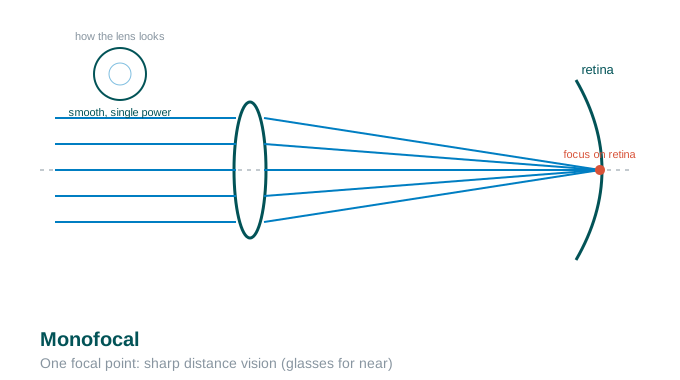
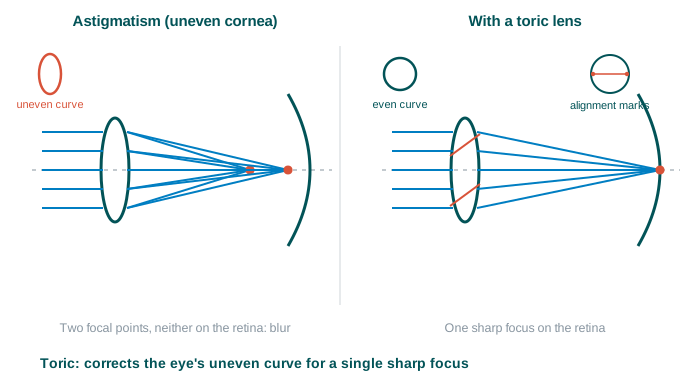
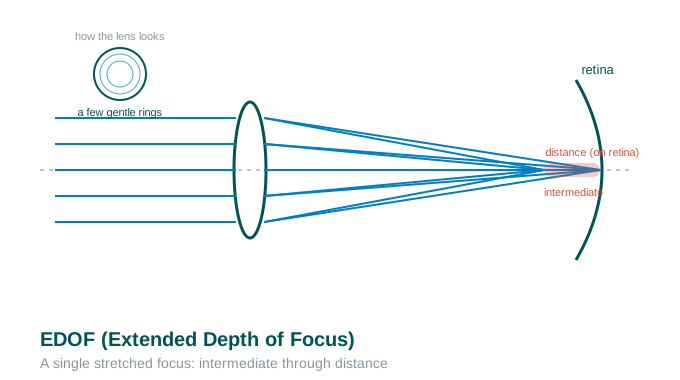
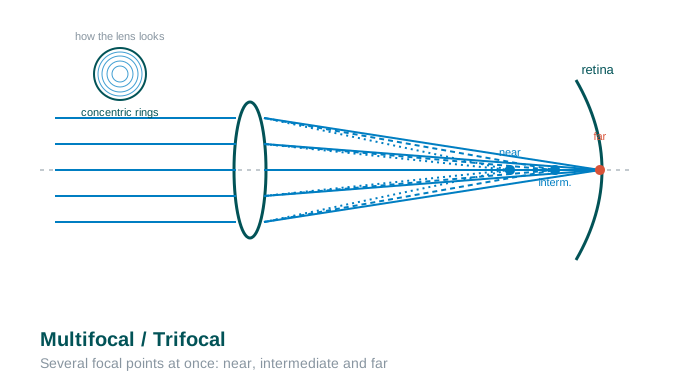
Illustrations created with AI assistance
The right lens depends on your eyes, lifestyle and budget. Our surgeon explains each option and its trade-offs before you decide.
Have a blurry vision?
Questions about your eyes? Book a consultation with our eye specialists.
Cataract surgery near you in Malad West
Choosing a cataract surgeon you can reach easily makes check-ups and follow-up visits simpler. At Akshar Eye Clinic, located in Malad West, Mumbai, we prioritize your eye health and offer expert services tailored to your needs.
People from all nearby localities, including Borivali, Kandivali, Goregaon, Charkop, Mahavir Nagar, Orlem, Thakur Complex, Thakur Village and Dindoshi can easily reach our clinic for consultations. When you visit Akshar Eye Clinic, you can expect a thorough evaluation of your condition. Our team uses modern diagnostic equipment to assess your eyes and explain the treatment options for your cataract.
We are committed to providing comprehensive care that meets your specific needs, making it convenient for you to achieve clearer vision
Frequently Asked Questions
What types of cataract surgery do you offer?
We provide both traditional and phacoemulsification cataract surgeries, tailored to individual patient needs for optimal recovery and vision.
How long does cataract surgery take?
The procedure typically takes about 15 to 30 minutes, with most patients returning home the same day.
What is the recovery process like after cataract surgery?
Most patients experience quick recovery, with vision improvement noticeable within a few days; follow-up visits are essential to monitor healing.
Is cataract surgery safe?
Yes, cataract surgery is generally considered safe with a high success rate.
How long does the recovery take after cataract surgery?
Most patients recover within a few days, but full healing can take several weeks.
Where can I find cataract surgery near me?
You can visit Akshar Eye Clinic in Malad West for cataract surgery services.
Does Akshar Eye Clinic offer cataract surgery in Mumbai?
Yes, Akshar Eye Clinic provides cataract surgery services for residents in Mumbai.
Will my vision be clear after cataract surgery?
Most patients experience improved vision after surgery, although some may still need glasses for certain activities.
Can a cataract occur at a younger age?
Yes, it can occur at any age. A child might be born with cataract as well.
Can a cataract develop as a side effect of a drug?
Yes, it can.
When Should You Consider Cataract Surgery?
As soon as possible, once the diagnosis has been confirmed by the doctor
What is The Cost of Cataract Surgery in Mumbai
Rs. 30,000 to Rs. 1,80,000 based on the type of lens that is chosen.
Is cataract surgery painful?
No. The eye is numbed with drops, and most people feel some pressure but little or no pain. It's usually over sooner than patients expect.
Do you use stitches or an eye patch?
Not in a routine case. The opening is small enough to seal by itself.
Can both eyes be done on the same day?
Usually not. We operate on one eye, let it settle, and do the second a short while later.
This information is for general education. Please speak with an eye specialist about your individual care.